
Common Mistakes Candidates Make in Job Applications
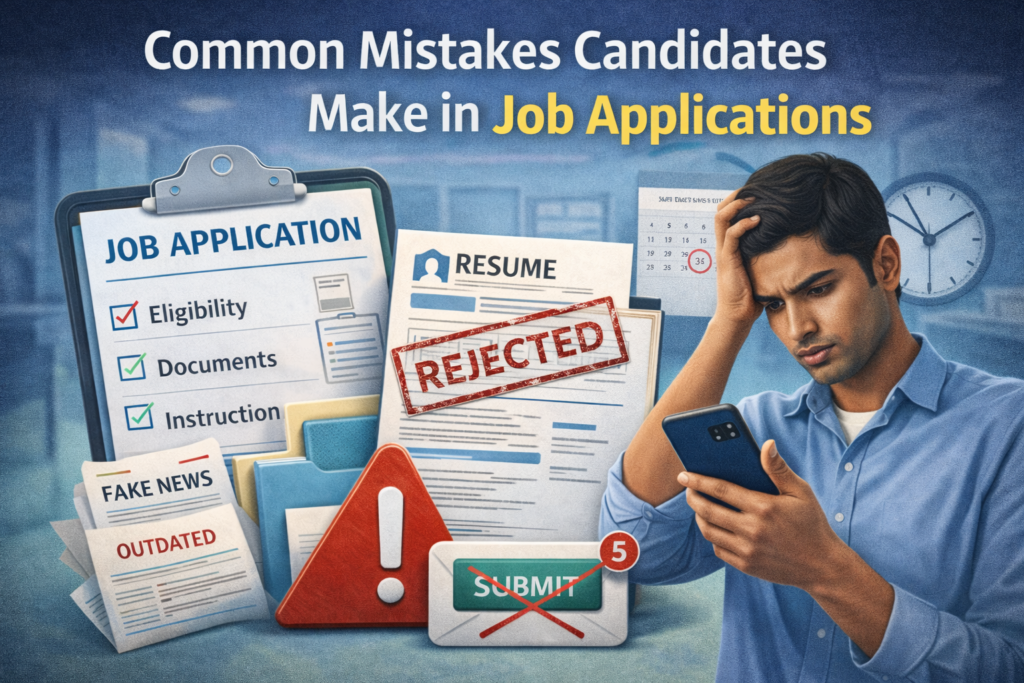
Applying for jobs is a critical step in building a career, yet many candidates lose valuable opportunities due to simple and avoidable mistakes. Whether applying for government positions or private-sector roles, errors in the application process can lead to rejection even before a candidate’s qualifications are reviewed.
Understanding these common mistakes can help job seekers submit stronger applications and improve their chances of success. This guide highlights frequent errors candidates make during job applications and explains how to avoid them.
Not Reading the Job Advertisement Carefully
One of the most common mistakes candidates make is failing to read the job advertisement thoroughly. Many applicants skim through the details and miss important information such as eligibility criteria, required documents, or the correct application method.
Government job advertisements, in particular, follow strict guidelines. Ignoring even a small requirement can result in immediate disqualification. Candidates should always read the complete advertisement from start to end before applying.
Applying Without Meeting Eligibility Criteria
Another frequent mistake is applying for jobs without meeting the stated eligibility requirements. Some candidates apply hoping for relaxation or exceptions that are not officially mentioned. This approach rarely works in structured recruitment systems.
For example, when applying for roles such as
Punjab Tourism Force Jobs 2026,
candidates must meet the required education, age limits, and physical standards exactly as stated in the advertisement. Applications that do not meet these conditions are usually rejected during initial screening.
Submitting Incomplete or Incorrect Documents
Incomplete documentation is a major reason for application rejection. Missing certificates, unclear scans, expired documents, or incorrect information can create doubts about a candidate’s seriousness and reliability.
Candidates should carefully prepare all required documents in advance and ensure that uploaded or submitted copies are clear, complete, and accurate. Double-checking document requirements before submission can prevent unnecessary rejection.
Using a Generic or Poorly Prepared Resume
Many candidates submit the same resume for every job without tailoring it to the specific position. A generic resume may fail to highlight relevant skills or experience required for the role.
A well-prepared resume should clearly reflect the candidate’s qualifications, experience, and suitability for the job being applied for. Errors such as spelling mistakes, outdated information, or unclear formatting can leave a negative impression.
Ignoring Application Instructions
Job advertisements often include specific instructions regarding file formats, naming conventions, application deadlines, or submission methods. Ignoring these instructions is a common and costly mistake.
For government and institutional jobs, instructions are strictly enforced. Applications submitted through the wrong channel or in an incorrect format may not be considered, regardless of the candidate’s qualifications.
Missing Application Deadlines
Late submission is another avoidable mistake. Some candidates wait until the last day to apply and encounter technical issues, website errors, or postal delays. Missing the deadline usually means automatic rejection.
Applying early not only reduces stress but also provides time to correct mistakes if needed.
Poor Communication and Follow-Up
Poor communication can harm a candidate’s chances during the application process. This includes unclear email communication, unprofessional language, or excessive follow-ups.
Candidates should communicate politely and professionally and follow official instructions regarding queries and updates. Unnecessary or repeated contact may create a negative impression.
Lack of Preparation for Tests and Interviews
Some candidates focus entirely on submitting applications and neglect preparation for tests or interviews. This can result in poor performance even if they are shortlisted.
Proper preparation is essential, especially for specialized roles. For healthcare-related positions, reviewing guides such as
How to Prepare for Nursing Job Interviews
can help candidates understand expectations and improve interview performance.
Relying on Unofficial Sources
Many applicants depend on social media posts or forwarded messages without verifying information from official sources. This can lead to applying for fake or outdated job advertisements.
Candidates should always rely on official department websites, recognized testing services, and verified job information platforms for confirmation.
Final Thoughts
Most job application mistakes are avoidable with careful reading, preparation, and attention to detail. Submitting accurate information, meeting eligibility requirements, and following official instructions can significantly improve a candidate’s chances of success.
By learning from common mistakes and adopting a more organized approach, job seekers can apply with confidence and make better progress toward their career goals.